
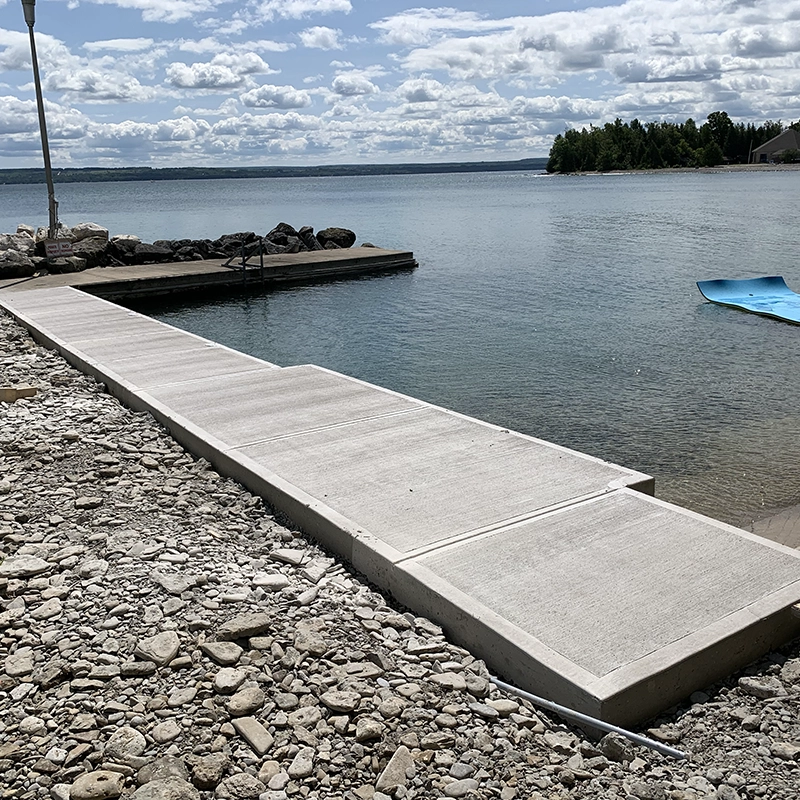
Building on the Waterfront:
How to Construct a Concrete Boat Dock That Lasts
If you own a property on the water in Georgian Bluffs or anywhere across the Bruce Peninsula, you know the environment is tough. Between the moisture, the fluctuating temperatures, and the movement of the ground near the shoreline, a standard concrete pour will fail quickly.
When we build a concrete boat dock, we aren’t just pouring a surface—we are building a structural element that needs to be anchored, reinforced, and finished to survive constant exposure to the elements.
The Challenges of Waterfront Concrete
The biggest enemy of a waterfront dock is moisture penetration. If water gets into the concrete, it expands when it freezes, leading to spalling, cracking, and eventual structural decay. That’s why our approach in waterfront settings focuses on three key areas:
Heavy Rebar Reinforcement: We use high-gauge steel to ensure the dock acts as a single, rigid slab. This prevents the “shifting” that often causes hairline cracks in cheaper, mesh-reinforced projects.
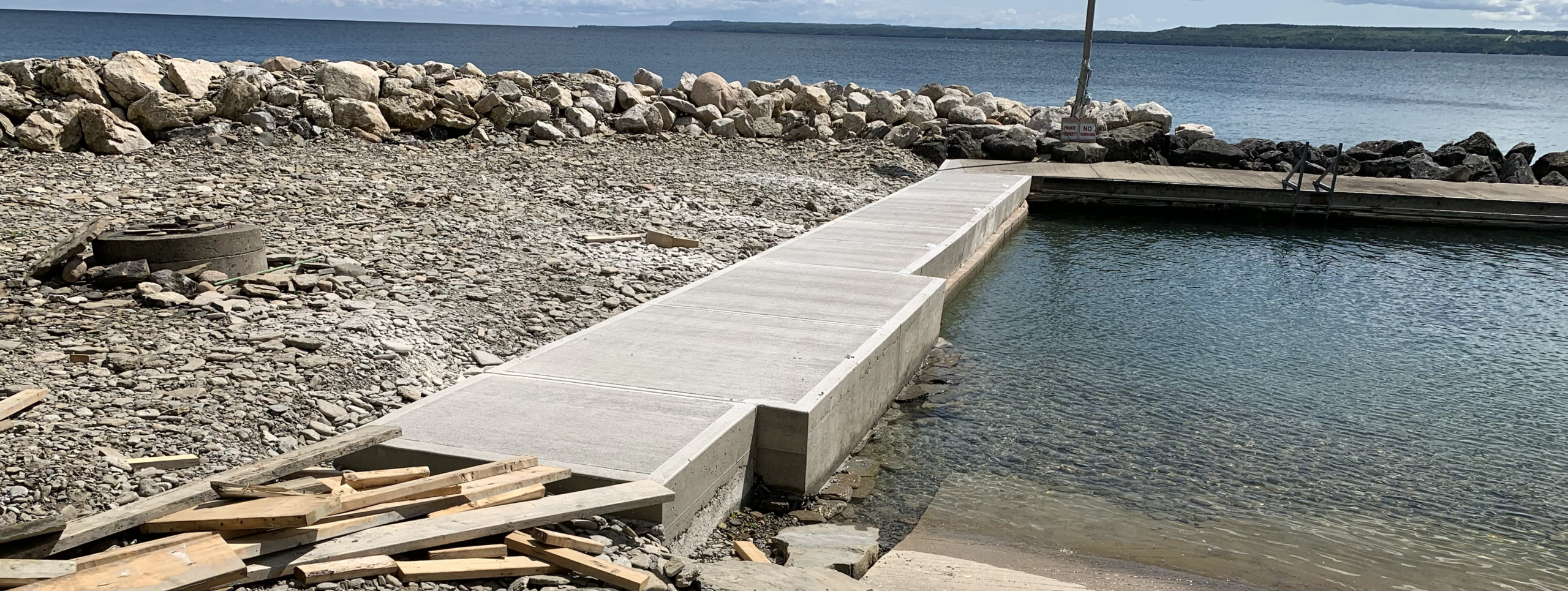
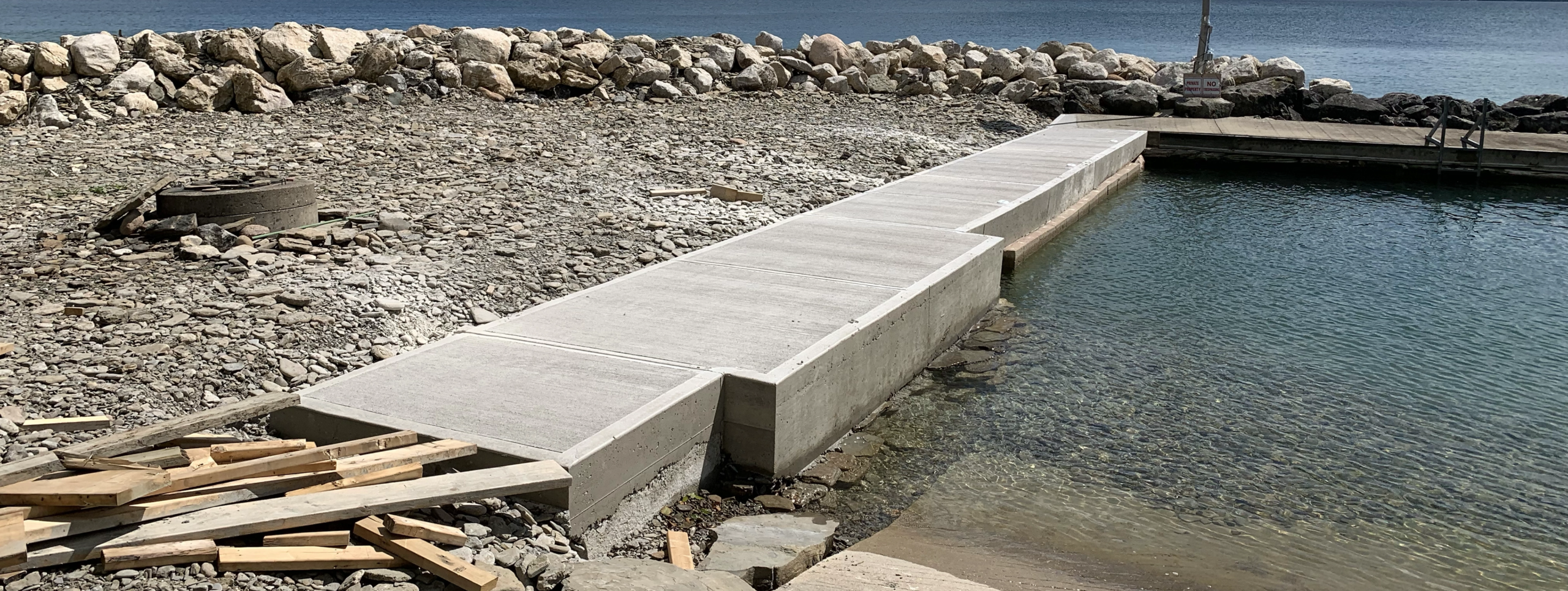
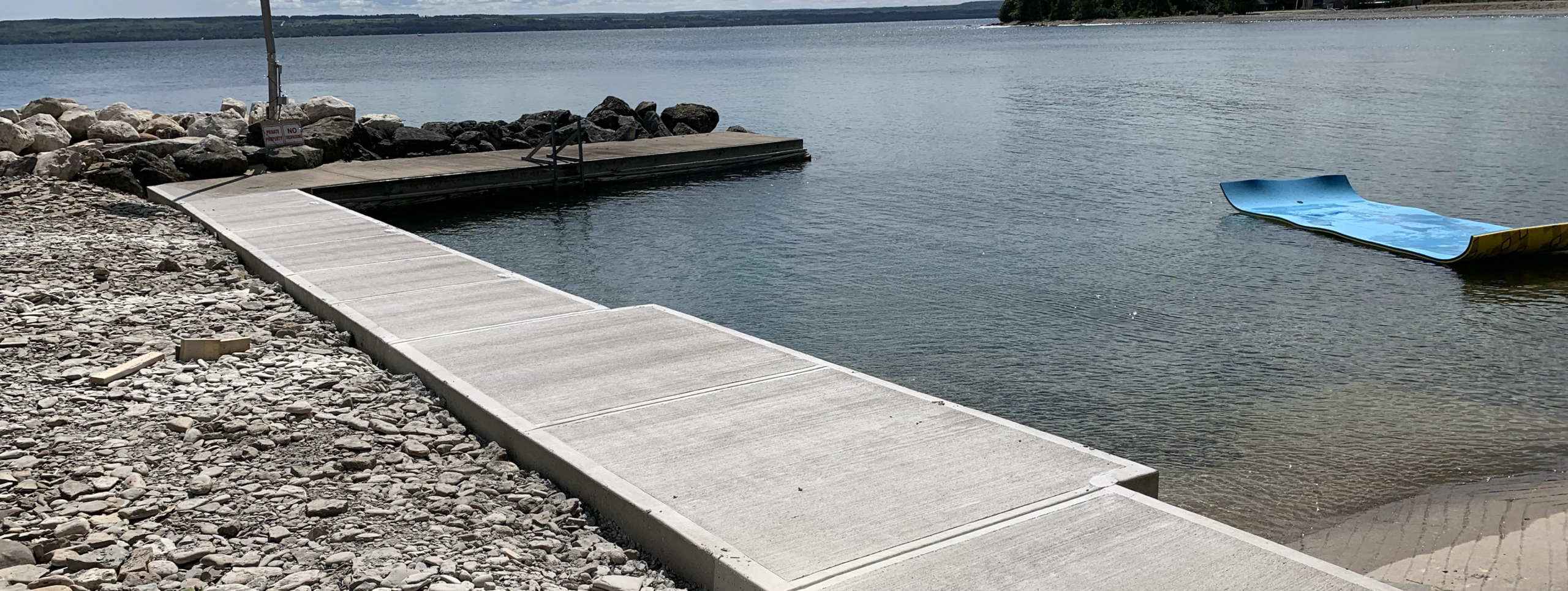
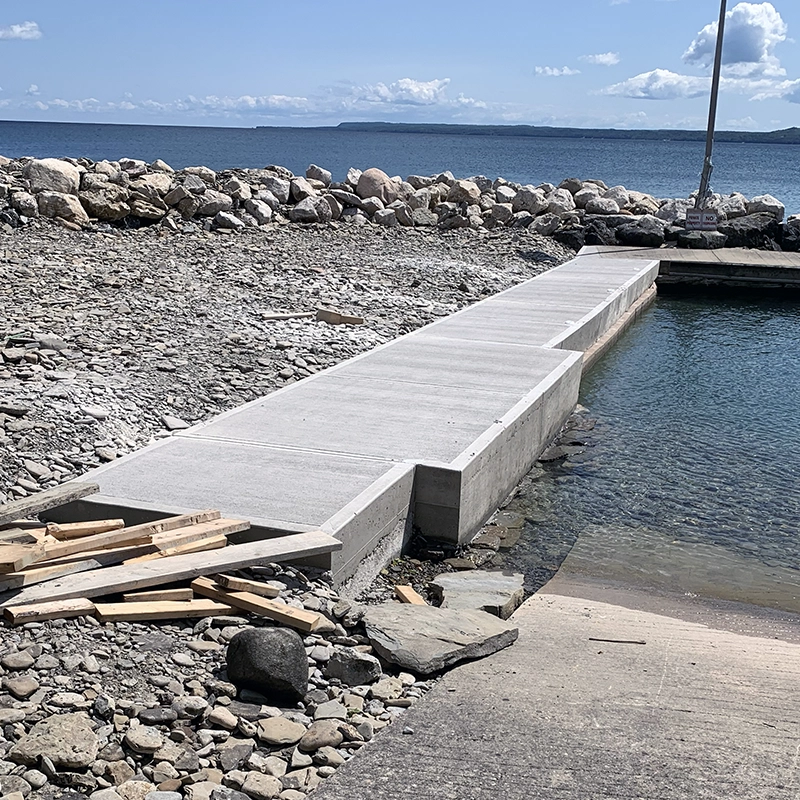
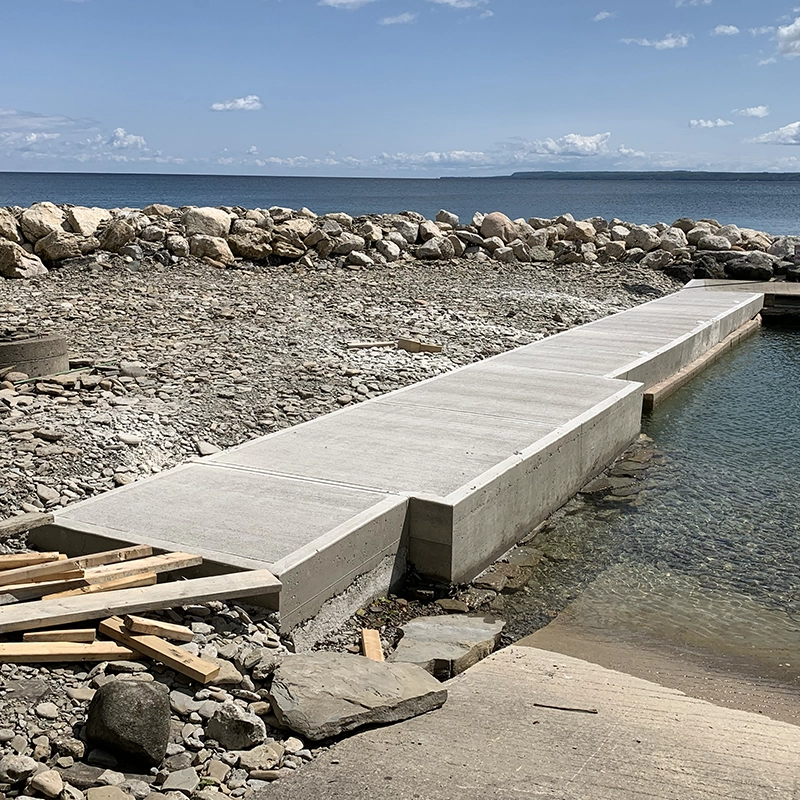
Controlled Movement with Hand-Tooled Joints: We use hand-tooled joints to manage expansion and contraction. Because these are finished by hand while the concrete is wet, they are incredibly durable and won’t trap water like a saw-cut joint might in a high-moisture area.
Surface Safety: A dock needs to be safe when it’s wet. We use a specialized broom finish that creates a non-slip texture without being too rough on bare feet.
The “Sons Concrete” Standard
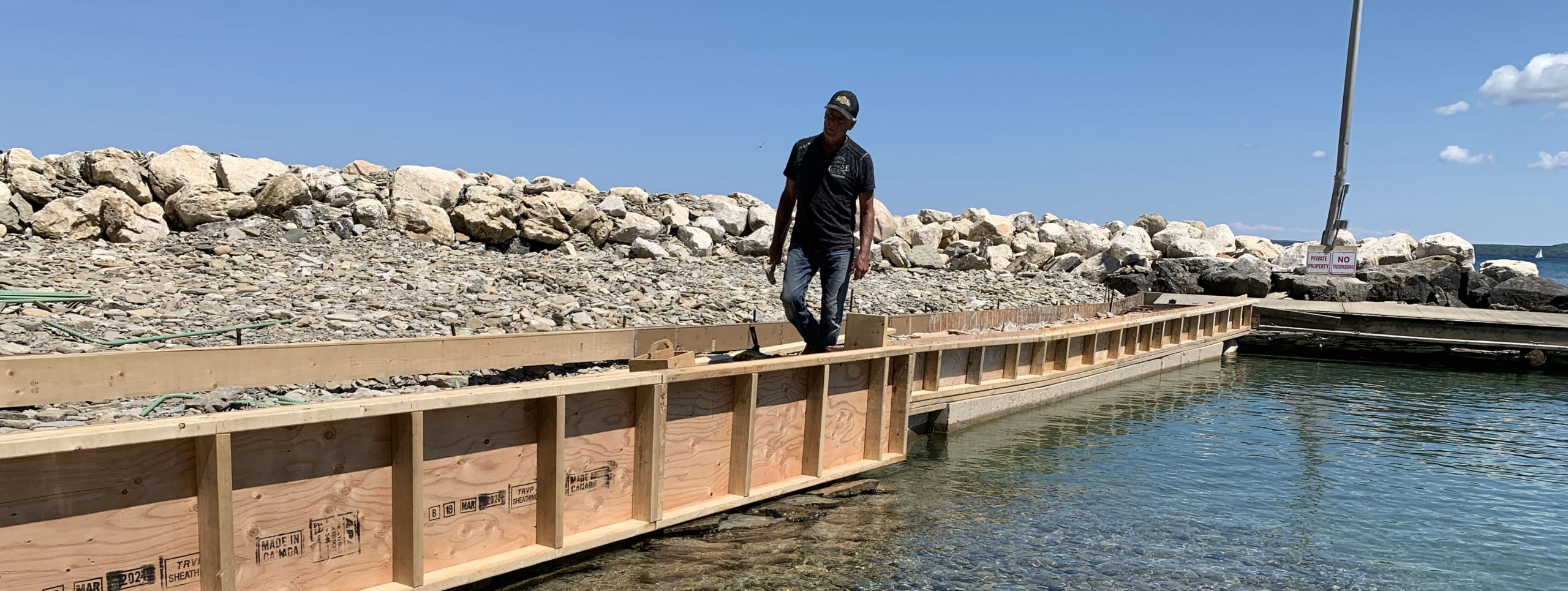
Building a concrete dock requires a much higher level of precision and preparation. Our process includes:
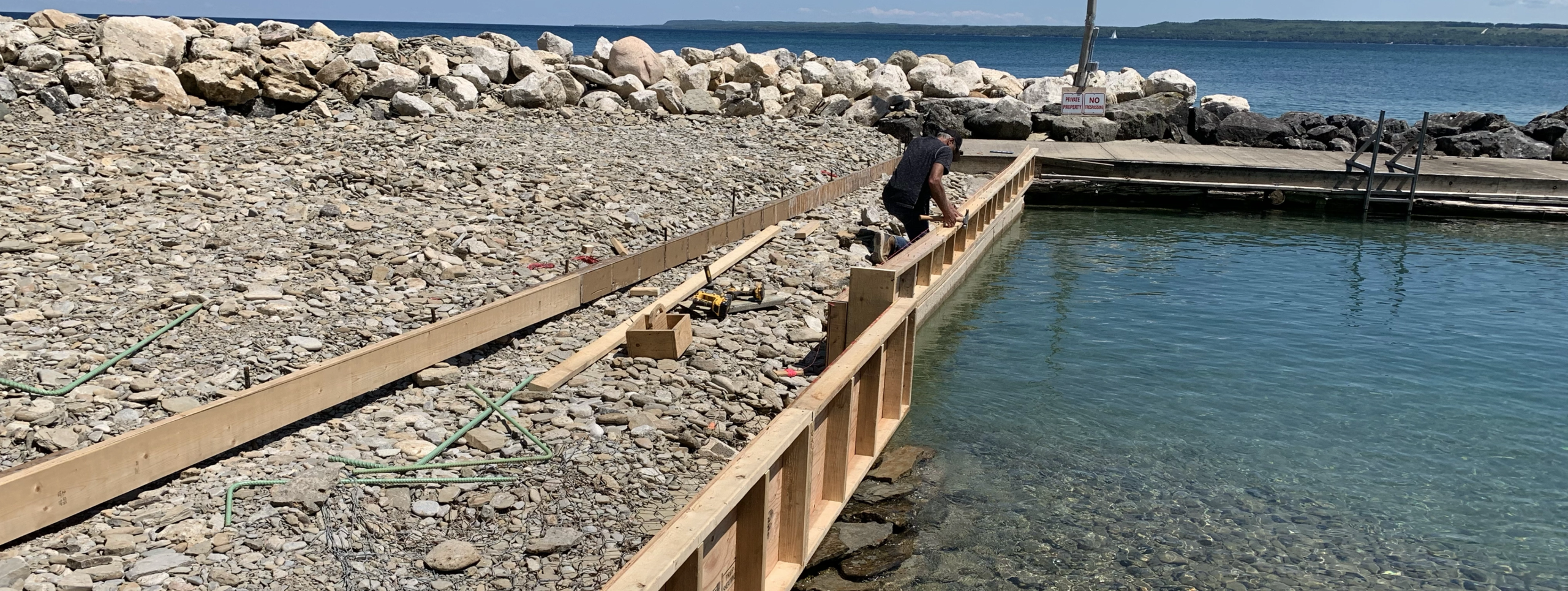
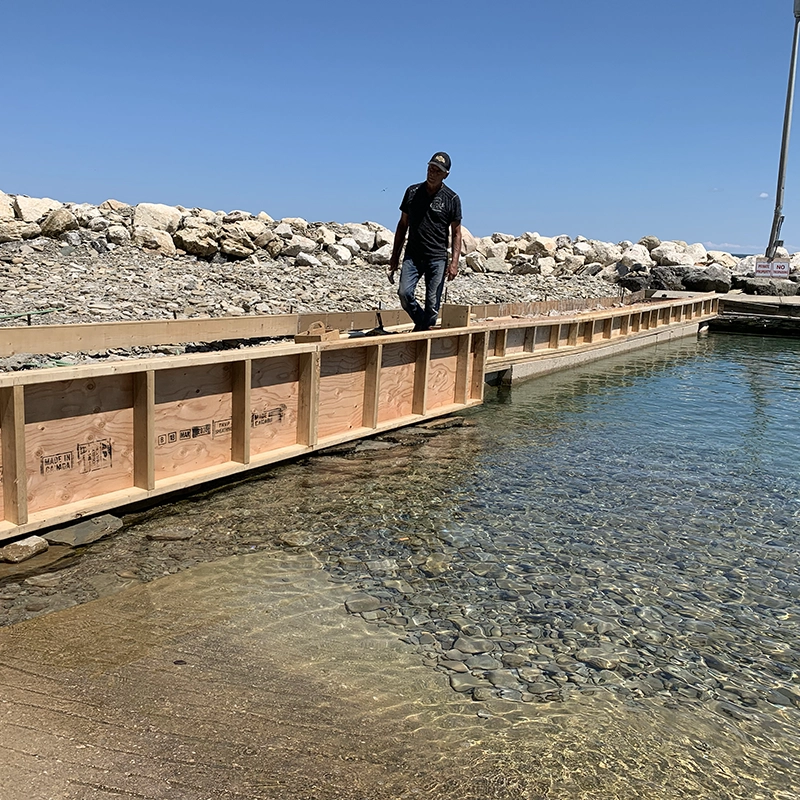
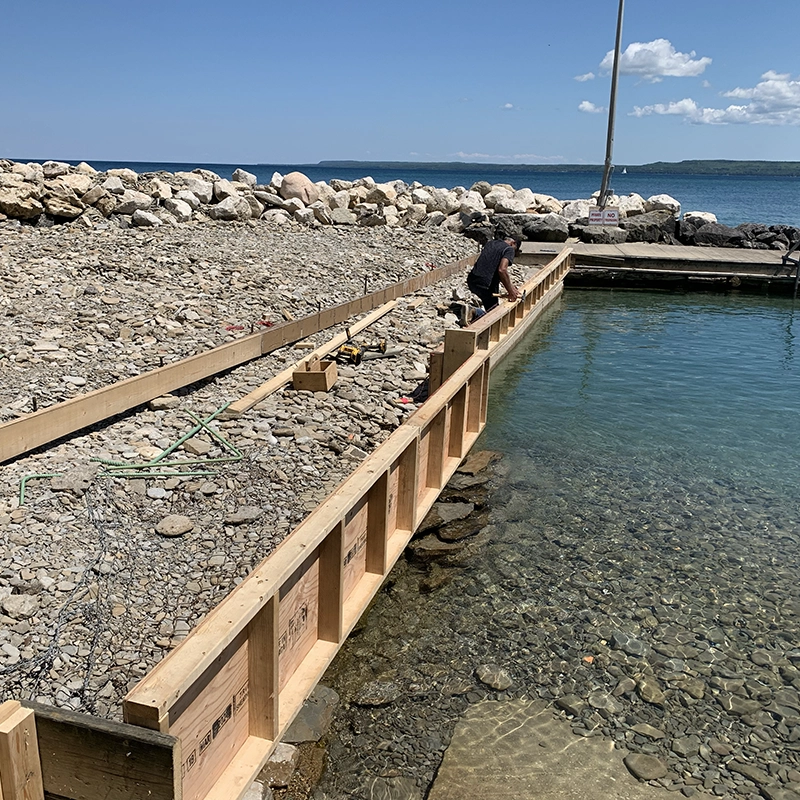
Custom Forming: We build a temporary structural framework to support the weight of the wet concrete while it cures.
Heavy-Gauge Reinforcement: We use a calculated grid of steel rebar to handle the structural load, ensuring the dock remains rigid.
Q: Why choose concrete over wood for a boat dock?
A: Concrete offers unmatched stability and longevity. Unlike wood, which rots, warps, or requires frequent staining and maintenance, a properly engineered concrete dock can last for decades with virtually no maintenance.
Q: Do you seal the dock after the pour?
A: Yes. In a waterfront environment, we recommend a high-quality, penetrating concrete sealer. This seals the pores of the concrete, preventing water from getting inside and protecting it against freeze-thaw cycles.
Q: How do you handle the ground prep near the water?
A: Soil near the water is often loose or unstable. We pay extra attention to our base preparation, often incorporating additional fill and proper compaction before we lay our rebar grid. This ensures your dock won’t settle unevenly over time.